



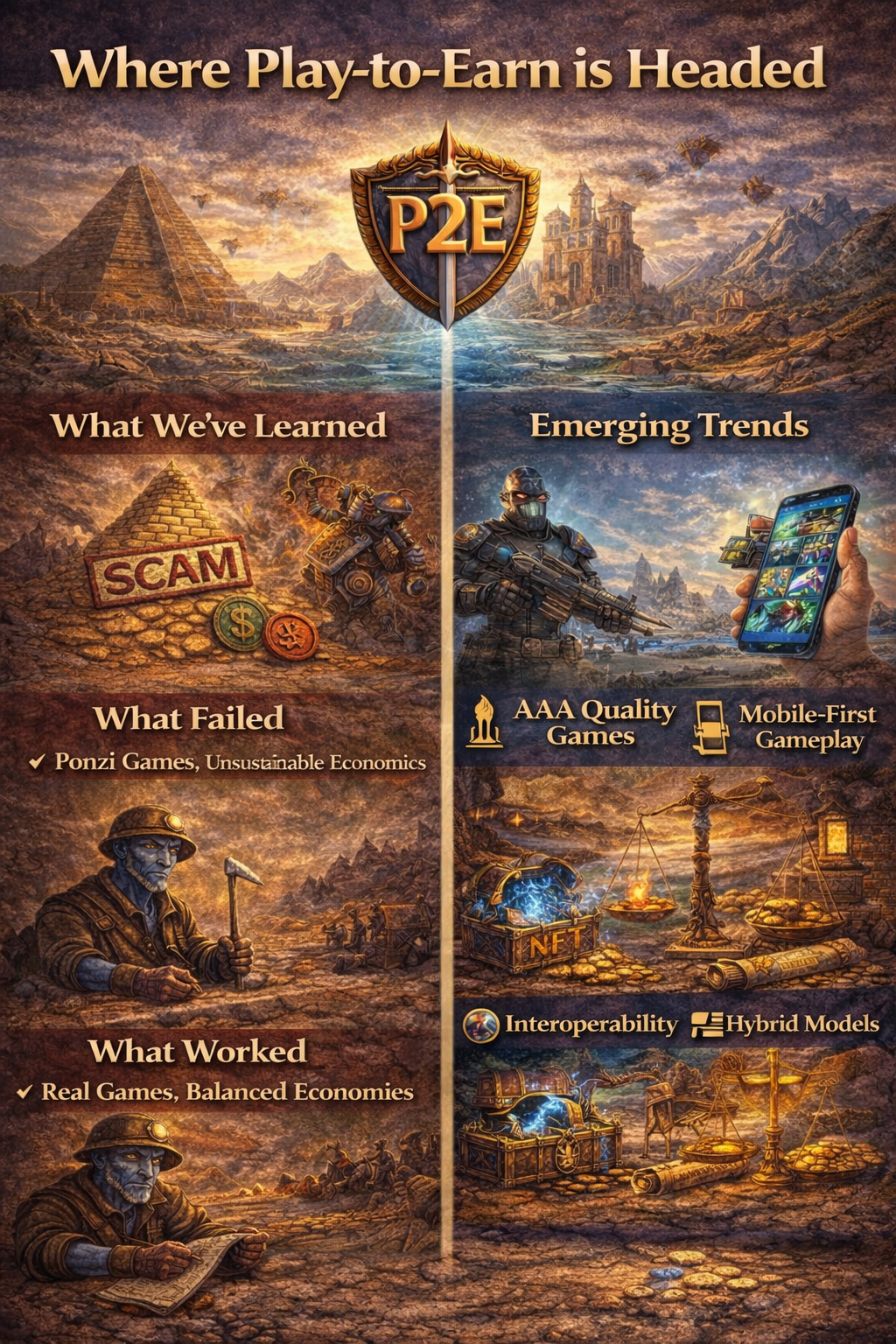
Play-to-earn has evolved dramatically since 2021. Where is it headed? Here’s what industry trends suggest.
What We’ve Learned
What Failed
- Ponzi-style economics
- Games that were just staking with graphics
- Unsustainable token inflation
- High-fee chains for frequent transactions
What Worked
- Real gameplay with strategic depth
- Balanced tokenomics
- Low-fee blockchains
- Genuine communities
Emerging Trends
1. AAA Quality Games
Major studios entering crypto gaming. Higher production values, better gameplay, mainstream appeal.
2. Mobile-First Design
Most gamers are on mobile. Successful P2E will meet them there.
3. Interoperability
Assets that work across multiple games. True digital ownership expanding beyond single titles.
4. Regulatory Clarity
As regulations develop, legitimate projects will thrive while scams decline.
5. Hybrid Models
Free-to-play with optional NFT ownership. Lower barriers, broader audiences.
Challenges Ahead
- Mainstream adoption still limited
- Regulatory uncertainty in many regions
- User experience needs improvement
- Onboarding complexity
What This Means for Players
Opportunities
- Better games coming
- More legitimate options
- Improving infrastructure
- Growing ecosystems
Cautions
- Many projects will still fail
- Due diligence remains critical
- Don’t chase every new thing
- Sustainable beats hype
Positioning for the Future
- Build skills in proven games
- Understand blockchain fundamentals
- Diversify across quality projects
- Stay informed but skeptical
Comments are closed